

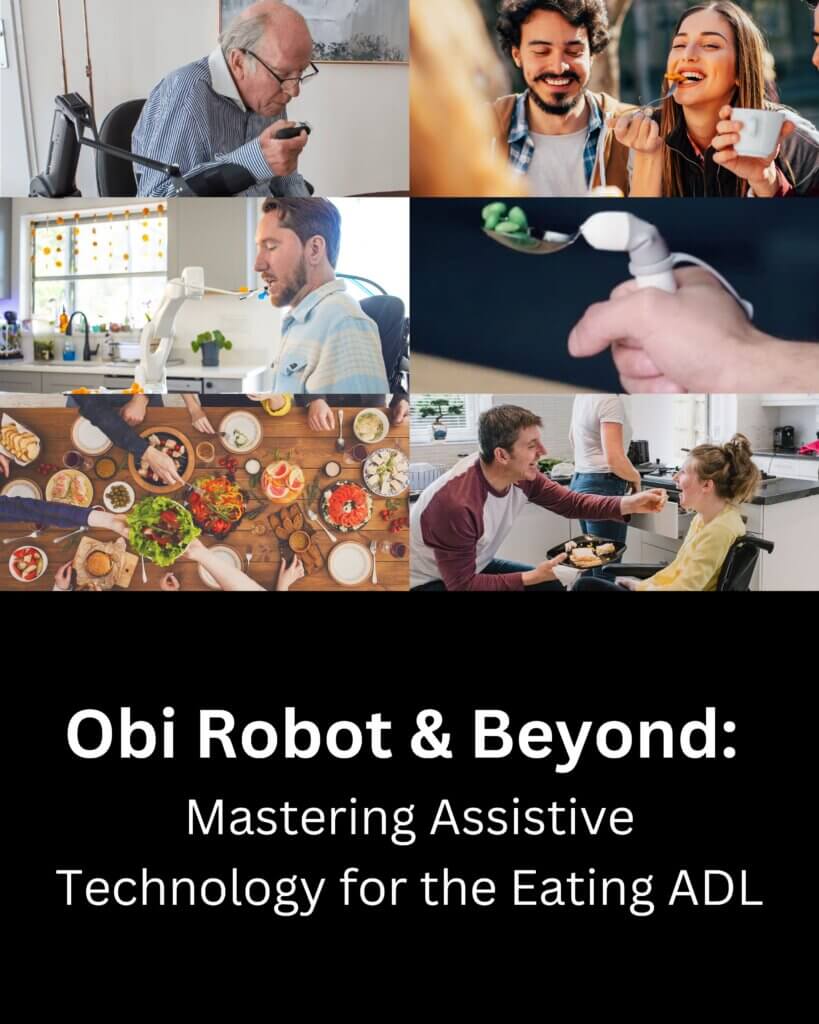
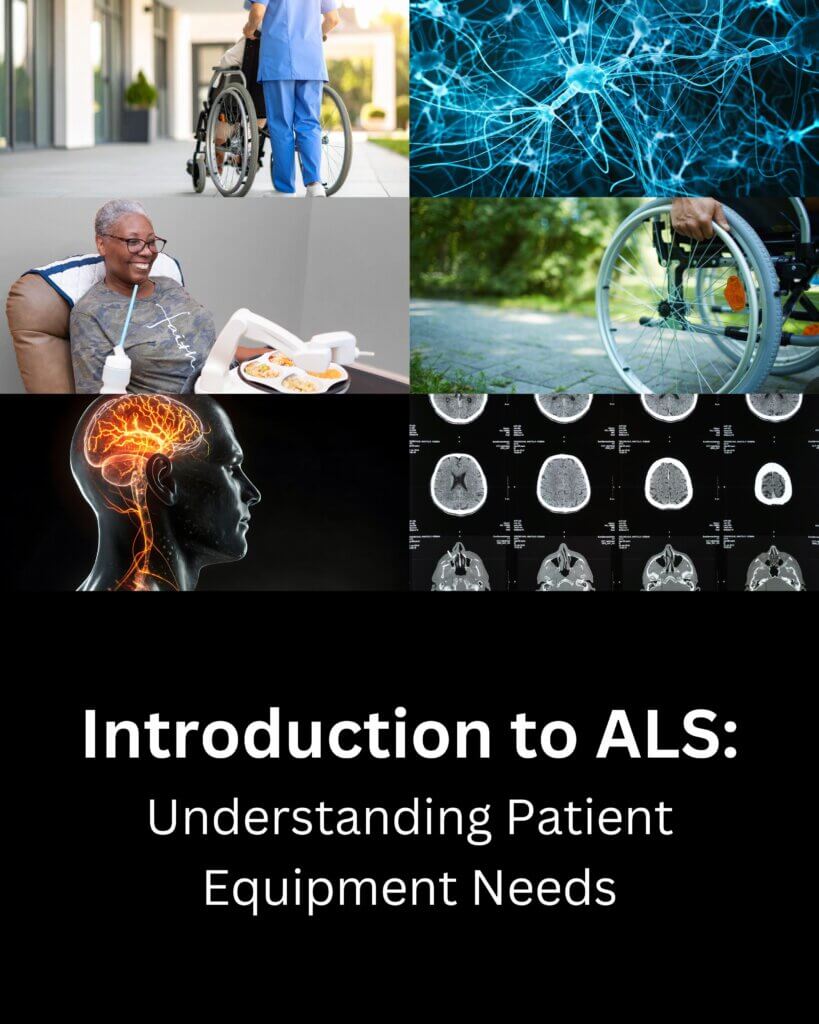
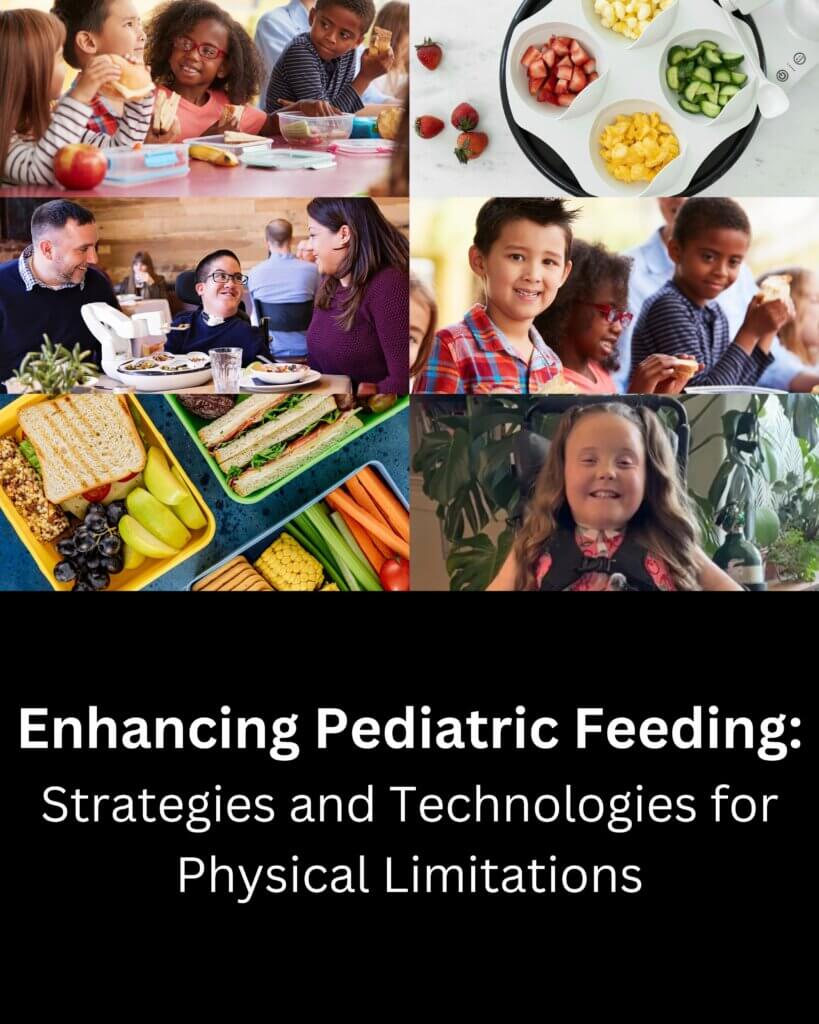
Contact us to request an Obi in-service at your facility!
In-services can be custom-tailored to the specific interests or specialties within your therapy department.
We do our best to accommodate requests for in-services and to meet your facility’s needs.
Learn about Obi and see how it works, virtually! We offer virtual demos several times a month.
Demo Topics: General learning session highlighting intended users, features & and functionality, food compatibility, cleaning & and storage, portability, funding & and reimbursement, and of course a live demonstration of Obi in action!
Please take a look at our virtual demo calendar in the link below.
Interested in a demo for your entire therapy department or students? Contact us!
Independent Feeding and Aspiration
“Feeding dependence poses an increased risk for aspiration and related complications in patients with dysphagia due to factors such as rapid and uncontrolled presentation of food by feeders” (Sura et al., 2012).
“Individuals who depend on others for feeding may be at a higher risk of developing medical complications such as aspiration pneumonia and gastroesophageal reflux disease”(Langmore et al., 2002; Langmore et al., 1998).
Food Intake
“Unhealthy dietary patterns and lack of food intake often result in complications with the immune system and malnutrition, which are associated with mortality and a 50% increase in hospital stays” (Childs et al., 2019; Stratton, 2007).
Pressure Sores
“Nutritional deprivation and insufficient dietary intake are the key risk factors for the development of pressure ulcers and impaired wound healing” (Saghaleini et al., 2018).
Emotional Satisfaction
“Having food choices reflects stimulus-reward values in brain activity, and by providing individuals the control to select their food, it is more likely they will experience satisfaction from the feeding activity” (Smeets et al., 2012).
Social Participation
Obi is a device that allows users to eat without the shadow of a caregiver, allowing for free conversation, connection, and relaxation during mealtime, which is social participation.“Social participation is crucial in humans to maintain physical, mental, and social well-being” (Venna et al., 2014).
Langmore, S. E., Skarupski, K. A., Park, P. S., & Fries, B. E. (2002). Predictors of aspiration pneumonia in nursing home residents.Dysphagia,17, 298-307. https://doi.org/10.1007/s00455-002-0072-5
Langmore, S. E., Terpenning, M. S., Schork, A., Chen, Y., Murray, J. T., Lopatin, D., & Loesche, W. J. (1998). Predictors of aspiration pneumonia: How important is dysphagia? Dysphagia,13, 69-81.
Saghaleini, S. H., Dehghan, K., Shadvar, K., Sanaie, S., Mahmoodpoor, A., & Ostadi, Z. (2018). Pressure ulcers and nutrition.Indian Journal of Critical Care Medicine,22(4),283–289. https://doi.org/10.4103/ijccm.IJCCM_277_17
Smeets, P. A. M., Charbonnier, L., van Meer, F., van der Laan, L. N., & Spetter, M. S. (2012). Food-induced brain responses and eating behavior. Proceedings of the Nutrition Society,71(4), 511-520.
https://doi.org/10.1017/S0029665112000808
Stratton, R. J. (2007). Malnutrition: Another health inequality? Proceedings of the Nutrition Society,66
(4), 522-529. https://doi.org/10.1017/S0029665107005848
Sura, L., Madhavan, A., Carnaby, G., & Crary, M. A. (2012). Dysphagia in the elderly: Management and nutritional considerations. Clinical Interventions in Aging,7, 287-298.
Venna, V. R., Xu, Y., Doran, S. J., Patrizz, A., & McCullough, L. D. (2014). Social Interaction plays a critical role in neurogenesis and recovery after stroke. Translational Psychiatry,4, e351. https://doi.org/10.1038/tp.2013.128
Are you looking for more information about the insurance process and reimbursement for a client?
Check out our Clinician Resources page or request our Insurance Submission Toolkit which includes an LMN template, Obi Observation of Use, and more.
Clinicians: Check out our Clinical Education Course opportunities for no cost! Learn more here.