ATP Resource Hub

Everything you need to assist your clients who are pursuing self-feeding.

How the Process Works

Contact Us Connect with our ATPs
Request a Trial Device
Client Evaluation
Submit Paperwork (Use our templates!)
Approval & Delivery
Denial? We can help through fair hearing

Is your client a good fit for Obi?

Request a Trial Device

Request In-Service for your Facilities

Funding & Documentation Toolkit

Request a Quote

Request Appeal Assistance

Connect with Sara, ATP!

Need Help?

Our team of ATPs are here to make the process go as smooth as possible.

Connect directly with our team for guidance on candidacy, documentation, funding questions, or implementation planning.

Why ATPs Recommend Obi:

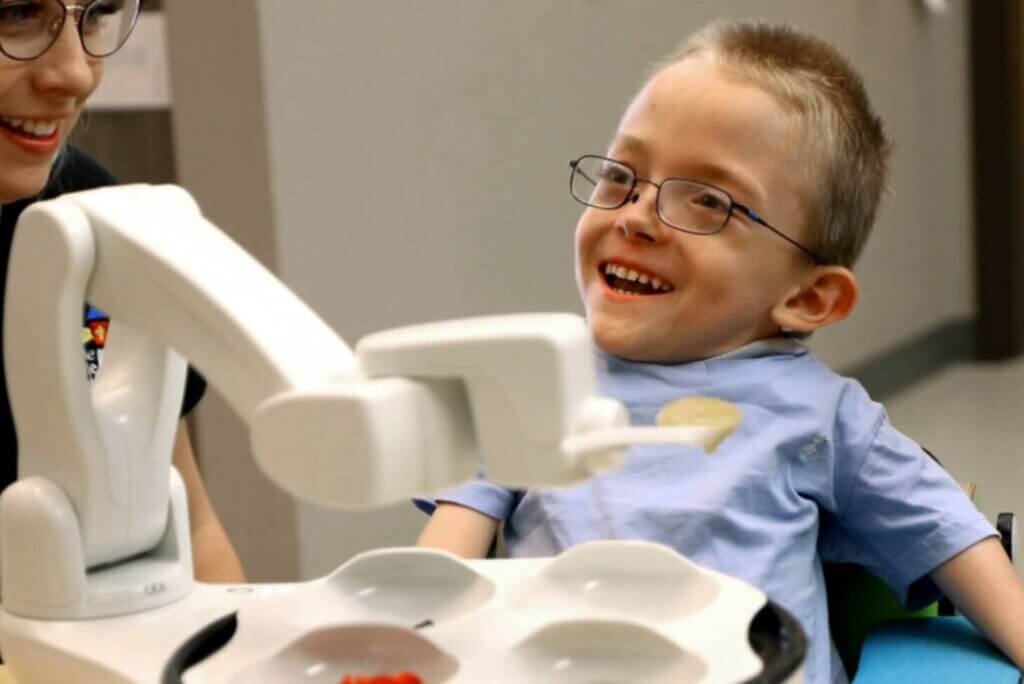
  • Supports self-feeding for clients with upper-extremity limitations
  • Intuitive and easy to use
  • Compatible with switch access for a wide range of users
  • Strong manufacturer support from trial through delivery
  • Free Trial Devices
  • Social, physical, and phsycological benefits!

The Obi Difference:

True Advocacy

A Commitment to Access

We’re not waiting for access to happen, we are working to create it. We partner closely with you to support funding pathways, education, and awareness so more individuals can achieve independent eating.

Our team supports through:
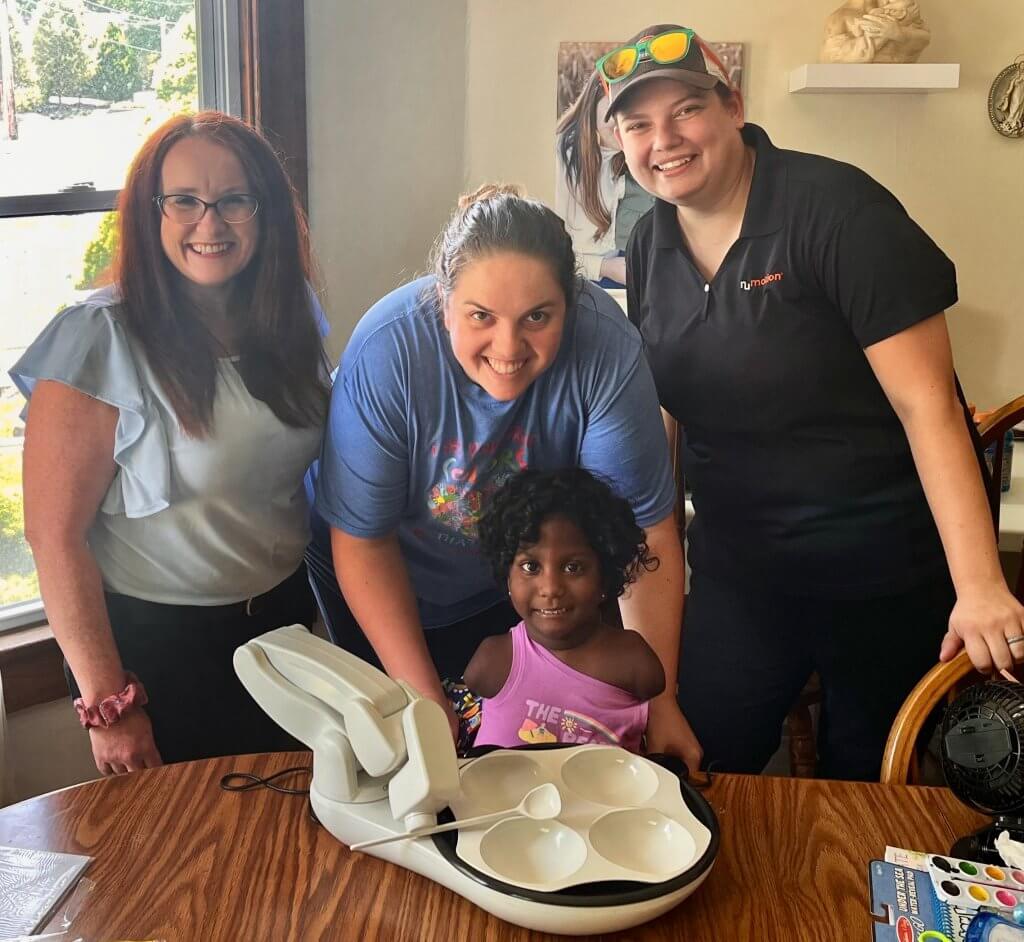
  • Free trial program & evaluations
  • Direct post-delivery support and training
  • LMN templates and reimbursement coordination
  • Fair hearing support when needed
  • Ongoing clinician education and CEU courses

Obi ATP FAQs

What support is available for ATPs?

We will work as close with you as you want us to! We offer a free trial program, trainings, in-services, LMN templates, evaluation documentation, reimbursement support, CEUs for OTs, appeal support and more! We have a team of ATPs and clinicians who are ready to help you!

Our trials are typically 1 week long. We offer longer trials for programs in California that require 30 days trials. We ship the device to you! To request a trial, click here.

We request at least 2 weeks’ notice to coordinate and ship a trial device. If needed sooner, please reach out for availability.

Obi is simple and easy to set up and use! Custom fitting, sizing or calibration is not needed for the device. Our users are able to get Obi working within 5 minutes from delivery! 

The switch operation can be customized. Obi comes with standard buddy buttons, but any switch with a 3.5mm headphone jack can work with Obi!

Our users have had success with Medicaid, private insurance, workers comp, waiver programs, the Veterans Administration and other funding sources. We have also seen universities, schools and IEPs cover Obi. Medicare does not currently cover Obi (E1399). Our team can provide more information about where we have seen success!

Individuals with bilateral upper extremity limitations who are unable to self-feed and have goals of achieving independent eating.

Common Pediatric Diagnoses: Arthrogryposis, Ataxia, Rett Syndrome, Cerebral Palsy, Muscular Dystrophy, Spinal Muscular Atrophy, Spinal Cord Injury, Limb Difference, and any other condition impacting upper extremity strength and mobility.

Common Adult Diagnoses: ALS, Spinal Cord Injury, Brain Injury, Parkinson’s Disease, Motor Neuron, Multiple Sclerosis, and any other condition impacting upper extremity strength and mobility.

Please reference the “Pre-Screen Questions” button above for more info.

The user should be able to sit upright with adequate head control to safely receive food from the utensil. Patients should be positioned sufficiently upright for food/liquid consumption and be able to maintain a sufficiently upright position throughout a meal (unless found to be appropriate by a treating healthcare professional).

A patient should NOT use Obi if any PRECAUTIONS of the following conditions in an unacceptable compromise to the benefit/risk ratio are present and of provided by the device a severity that results. Where appropriate, special attention should be given to whether the following attributes pose an unacceptable risk to unsafe feeding or eating.

  1. Cognitive/behavioral impairment: Inability to understand or perform correct use of the device and/or at risk for combative/self-injurious behavior during meals.
  2. Deviations from pre-existing dietary restriction: No changes to food preparation should be made to use Obi that would directly contradict any current recommended food or liquid textures/consistencies prescribed by a healthcare professional. 
  3. Dysphagia: Significant oral motor, breath, or swallowing impairment which could pose an elevated risk of choking/aspiration (unless found to be appropriate by a treating healthcare professional who has reviewed and discussed the benefit/risk assessment with the pati /or caregiver ) ent and. Any specific recommendations by the provider must be strictly followed.
  4. Excessive movement: Uncontrollable/forceful movements that prevent correct and/or safe use of the device. 
  5. Insufficient head control: Insufficient head control to reliably position the Obi utensil near the insufficient head and oral motor control to reliably remove content from the utensil. 
  6. Insufficient movement: Unable to operate any compatible accessibility switches: Pressure Switch, Toggle Switch, Pillow Switch, Sip and Puff, etc. 
  7. Reclined positions: Patients that cannot be positioned sufficiently upright for food/liquid consumption or maintain a sufficiently upright position throughout a meal (unless found to be appropriate by a treating healthcare professional). 
  8. Open mouth sores: Any significant cuts, ulcerations, or oral bleeding.
  9. Open skin sores: Any open wound on an area of the body used to activate Accessibility Switch(es) or to contact Obi.

We recommend that solid foods be between the size of a pea and grape to ensure that Obi can properly pick the food up with the spoon. Larger solid foods should be cut to these sizes.

Sticky foods, such as mac & cheese or mashed potatoes may result in larger bites due to their consistency. You can add extra cream, butter, cheese or broth to make sure the food doesn’t clump together.

Liquid foods such as soup, stew, cereal, pudding, etc. all work well!

Our users have fun trying foods with Obi and are always impressed with what Obi can do! 

Yes. Obi is supported by clinical usability studies demonstrating improvements in independence and quality of life. Request the supporting literature here.

  • Prior authorization request
  • HCPCS coding
  • Insurance verification
  • ATP evaluation notes – RX
  • Letter of Medical Necessity (LMN)
  • Equipment quote
  • Detailed product configuration

Frequent denial reasons include:

Documentation errors

  • Missing signatures
  • Incomplete LMN
  • Inconsistent patient information

Timing errors

  • Equipment selected before evaluation
  • Incorrect dates
  • Clinical issues
  • Insufficient medical necessity
  • Lack of trial of lower-cost equipment

Administrative issues

  • Incorrect HCPCS codes
  • Missing prior authorization

Obi Pre-Trial Checklist

Below are the pre-screen questions you can use to evaluate your client. We’re here to help: If you are unsure if your client is a good fit for Obi, contact us!

You can download this form here

1. Body Presentation
  • Manageable tone
  • Adequate trunk control
  • Functional UE positioning

Concerns:

  • Severe Spasticity
  • Significant Ataxia
  • Fixed Contractures
  • Poor Trunk Stability
2. Visual Ability
  • Able to track soon/food
  • Uses compensatory strategies

Concerns:

  • Severe impairment without compensation
  • Visual neglect or field cut
3. Upright Sitting Posture
  • Tolerates Upright Positioning
  • Adequate Head Control

Concerns:

  • Unable to maintain posture
  • Poor head control
  • Extensor thrust/sliding
4. Cognition
  • Understands cause-and-effect
  • Follows simple directions
  • Willing to participate

Concerns:

  • Does not understand task
  • Unable to follow directions
  • Limited Engagement
5. Switch Access
  • Not overly fatiguing
  • Reliable movement identified
  • Does not interfere with feeding

Concerns:

  • No consistent access
  • Inconsistent movement
  • Conflicts with positioning
6. Spoon Clearance
  • Accepts spoon
  • Clears food from utensil
  • Understands eating

Concerns:

  • Oral defensiveness
  • Poor lip closure
  • Unable to complete feeding
7. Dietary Restrictions / Consumption Method
  • Participates in oral feeding
  • Medically cleared

Concerns:

  • Exclusive tube feeding
  • Medical restrictions limiting oral trials

Note: Obi can accommodate a variety of food textures.

8. Oral Motor Function
  • Safe swallow
  • Manages bolus

Concerns:

  • Severe dysphagia
  • High aspiration risk
  • oor oral motor control

Is your client a good fit for Obi?

Individuals with bilateral upper extremity limitations who are unable to self-feed and have goals of achieving independent eating.

Common Pediatric Diagnoses: Arthrogryposis, Ataxia, Rett Syndrome, Cerebral Palsy, Muscular Dystrophy, Spinal Muscular Atrophy, Spinal Cord Injury, Limb Difference, and any other condition impacting upper extremity strength and mobility.

Common Adult Diagnoses: ALS, Spinal Cord Injury, Brain Injury, Parkinson’s Disease, Motor Neuron, Multiple Sclerosis, and any other condition impacting upper extremity strength and mobility.


What are the contraindications?

A patient should NOT use Obi if any PRECAUTIONS of the following conditions in an unacceptable compromise to the benefit/risk ratio are present and of provided by the device a severity that results. Where appropriate, special attention should be given to whether the following attributes pose an unacceptable risk to unsafe feeding or eating.

  1. Cognitive/behavioral impairment: Inability to understand or perform correct use of the device and/or at risk for combative/self-injurious behavior during meals.
  2. Deviations from pre-existing dietary restriction: No changes to food preparation should be made to use Obi that would directly contradict any current recommended food or liquid textures/consistencies prescribed by a healthcare professional. 
  3. Dysphagia: Significant oral motor, breath, or swallowing impairment which could pose an elevated risk of choking/aspiration (unless found to be appropriate by a treating healthcare professional who has reviewed and discussed the benefit/risk assessment with the pati /or caregiver ) ent and. Any specific recommendations by the provider must be strictly followed.
  4. Excessive movement: Uncontrollable/forceful movements that prevent correct and/or safe use of the device. 
  5. Insufficient head control: Insufficient head control to reliably position the Obi utensil near the insufficient head and oral motor control to reliably remove content from the utensil. 
  6. Insufficient movement: Unable to operate any compatible accessibility switches: Pressure Switch, Toggle Switch, Pillow Switch, Sip and Puff, etc. 
  7. Reclined positions: Patients that cannot be positioned sufficiently upright for food/liquid consumption or maintain a sufficiently upright position throughout a meal (unless found to be appropriate by a treating healthcare professional). 
  8. Open mouth sores: Any significant cuts, ulcerations, or oral bleeding.
  9. Open skin sores: Any open wound on an area of the body used to activate Accessibility Switch(es) or to contact Obi.

Is Obi Right for Me?

Obi accommodates most individuals who are living with a condition affecting their upper extremity function. Users should possess the ability to safely and successfully operate Obi, as well as the ability to chew and swallow without assistance. Obi is indicated for:

  • Amyotrophic Lateral Sclerosis (ALS)
  • Amputation
  • Arthrogryposis Multiple Congenita (AMC)
  • Brain Injury (TBI)
  • Cerebral Palsy
  • Essential Tremor
  • Muscular Dystrophy
  • Multiple Sclerosis
  • Rett syndrome
  • Parkinson’s Disease
  • Spinal Cord Injury
  • Spinal Muscular Atrophy
  • Other Conditions Impacting Upper Extremities

Any information provided on this website is for educational or informational purposes only and should not be considered a substitute for professional medical advice or consultation with a healthcare professional. Consult your clinician to see if Obi is right for you.

Is Obi Right for Me?

Obi accommodates most individuals who are living with a condition affecting their upper extremity function. Users should possess the ability to safely and successfully operate Obi, as well as the ability to chew and swallow without assistance. Obi is indicated for:

  • Amyotrophic Lateral Sclerosis (ALS)
  • Amputation
  • Arthrogryposis Multiple Congenita (AMC)
  • Brain Injury (TBI)
  • Cerebral Palsy
  • Essential Tremor
  • Muscular Dystrophy
  • Multiple Sclerosis
  • Rett syndrome
  • Parkinson’s Disease
  • Spinal Cord Injury
  • Spinal Muscular Atrophy
  • Other Conditions Impacting Upper Extremities
 

Any information provided on this website is for educational or informational purposes only and should not be considered a substitute for professional medical advice or consultation with a healthcare professional. Consult your clinician to see if Obi is right for you.

Clinicians: Check out our Clinical Education Course opportunities for no cost! Learn more here.

Skip to content